
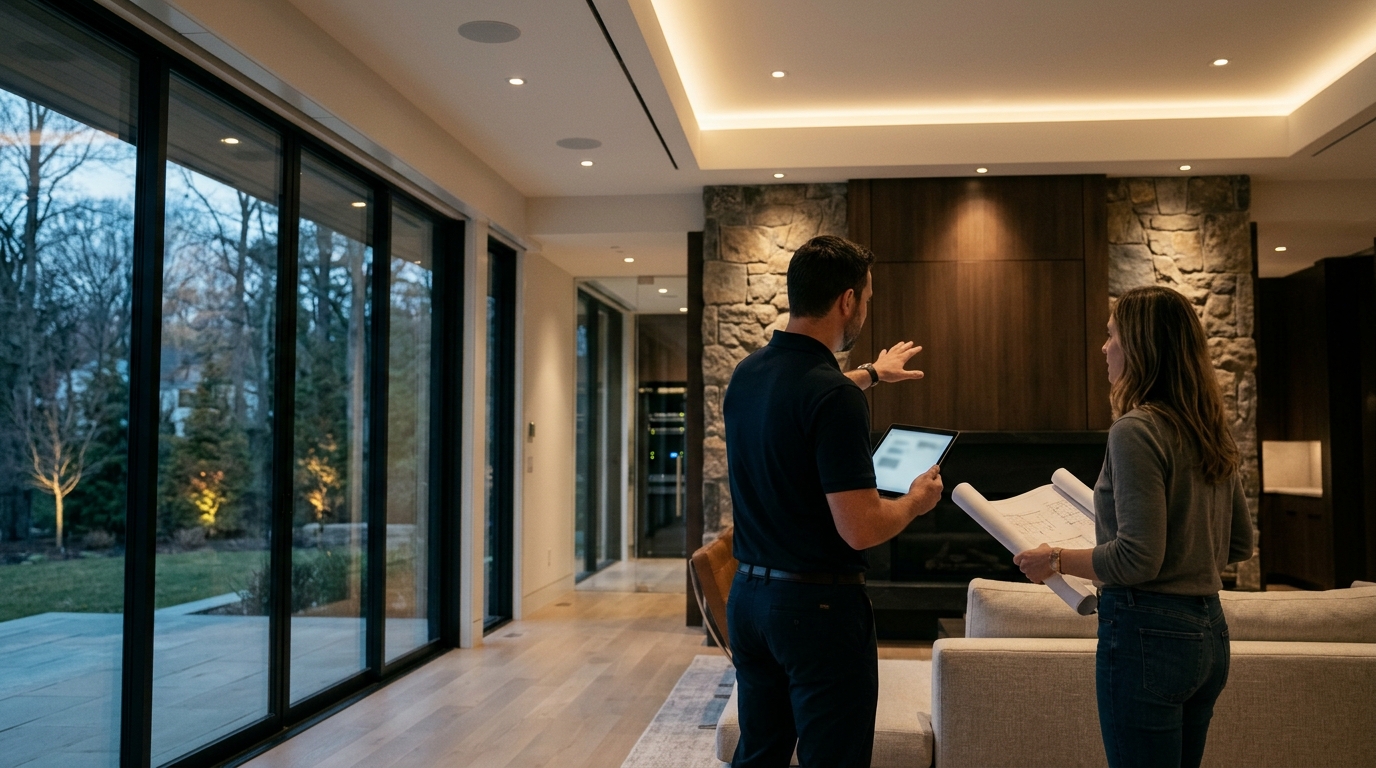
For complex Bergen County home technology projects, a dedicated smart home integrator is the superior choice over general electricians or big-box retailers. While electricians handle power and big-box stores sell hardware, only integrators like JMG Audio Video Inc. provide the end-to-end design, programming, and long-term support required for seamless automation. This approach ensures your lighting, audio, and climate systems work together as a single, reliable ecosystem rather than a collection of disconnected gadgets.
Smart Home Integrators: The Design-First Approach
A smart home integrator is a specialized professional who designs, installs, and programs complex technology systems to work together. Unlike general contractors, these experts focus on the user experience and the logical flow of your home's automation. In Northern New Jersey, firms like JMG Audio Video Inc. bring over two decades of experience to the table, working directly with architects and builders to ensure technology is embedded correctly from the start.
Strengths and Capabilities
Integrators excel at system cohesion. They understand how a lighting scene interacts with motorized shades and how audio zones respond to security triggers. They handle the intricate wiring, programming, and calibration that makes a home feel intuitive. For luxury residential clients in Alpine, Franklin Lakes, and Ridgewood, this level of bespoke design is critical for achieving a high-end, functional living space.
Limits and Considerations
The primary limitation of hiring an integrator is the initial cost. Because you are paying for expertise, design time, and premium components, the upfront investment is higher than buying off-the-shelf products. However, this cost is offset by the reliability and longevity of the system. Integrators typically do not handle general electrical repairs or plumbing, so they are best suited for technology-specific projects.
Electricians: Power and Safety Specialists
An electrician is a licensed tradesperson responsible for the installation, maintenance, and repair of electrical systems. Their primary focus is safety, code compliance, and the distribution of power. While they are essential for any home, their expertise rarely extends to the programming or integration of smart devices.
Strengths and Capabilities
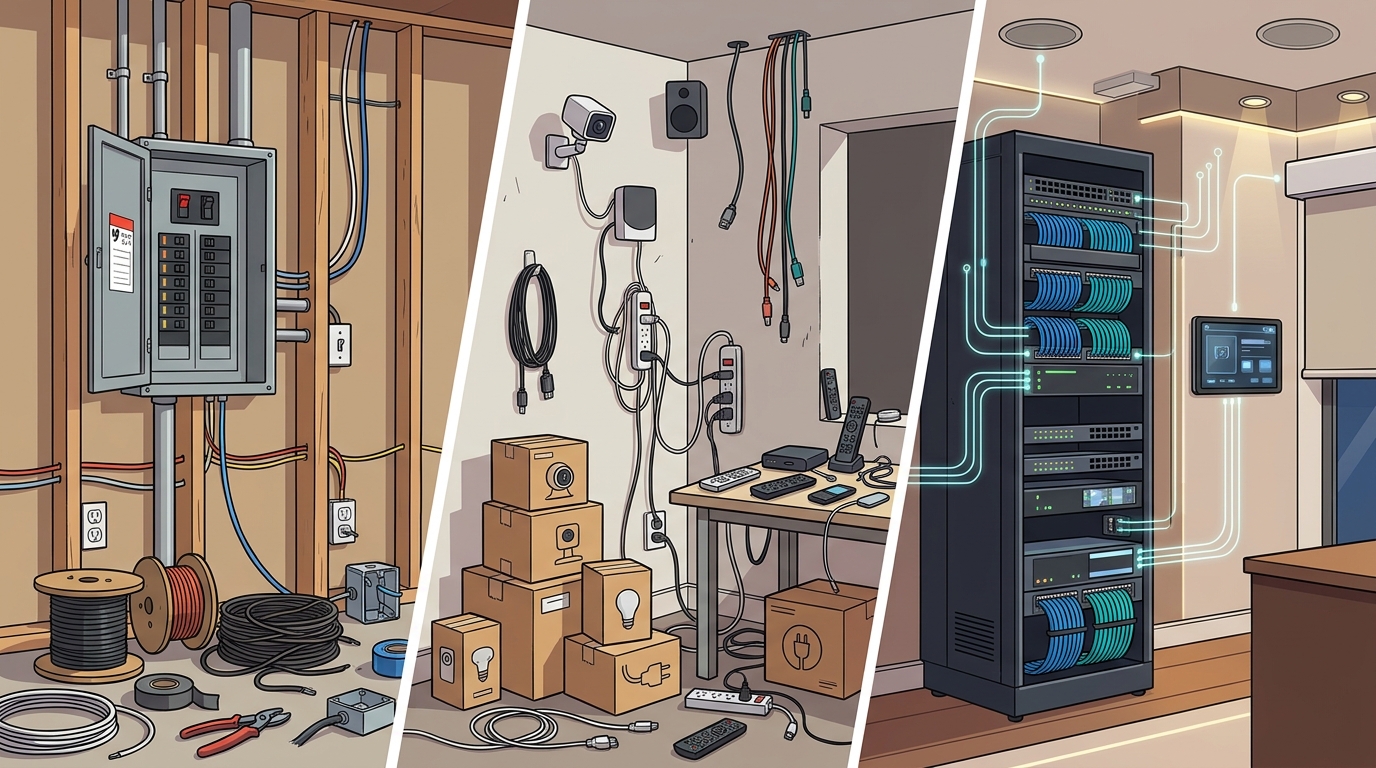
Electricians are indispensable for the physical infrastructure of a smart home. They install the conduit, run the low-voltage wiring, and ensure that all power connections meet local safety codes. If you are adding new circuits for a home theater or installing hardwired lighting controls, an electrician is the correct professional to call. They provide the backbone upon which smart technology operates.
Limits and Considerations
Electricians generally do not offer design services for automation. They will install the hardware you provide, but they are not typically equipped to program complex scenes, troubleshoot network conflicts, or integrate multiple brands into a single control interface. If you hire an electrician to install smart switches, you will likely need a separate technician to configure them, leading to potential gaps in accountability.
Big-Box Installers: Convenience and Cost
A big-box installer is a service provider associated with large retail chains that sells and installs consumer electronics and smart home devices. These services prioritize speed, standardized products, and lower price points. They are often the first point of contact for homeowners looking for a quick, simple upgrade.
Strengths and Capabilities
Big-box installers offer convenience and accessibility. They can quickly install a smart thermostat, a video doorbell, or a basic set of smart lights. For simple, standalone devices that do not require complex integration, this is a viable and affordable option. They are well-suited for renters or homeowners who want to add a few smart features without a major renovation.
Limits and Considerations
The major drawback is the lack of customization and long-term support. Big-box installers typically use a limited catalog of products and follow a standardized installation process. They rarely provide the deep programming or system-wide integration needed for a whole-home automation project. Furthermore, their support is often limited to the warranty period of the specific device, leaving you without a dedicated partner for ongoing system health.
Comparison Table: Service Provider Options
| Criteria | Smart Home Integrator | Electrician | Big-Box Installer |
|---|---|---|---|
| Primary Focus | System Design & Integration | Power & Safety | Product Sales & Basic Setup |
| Customization Level | High (Bespoke) | Low (Standard Code) | Low (Catalog-Based) |
| Programming & Logic | Expert | Minimal to None | Basic Configuration |
| Upfront Cost | High | Moderate | Low |
| Long-Term Support | Dedicated Partnership | Per-Job Basis | Warranty Only |
| Best For | Whole-Home Automation | Wiring & Circuits | Standalone Devices |
Choosing the Right Provider for Your Project
Selecting the right professional depends on the scope of your project and your long-term goals for your home's technology.
Choose a Smart Home Integrator If
You are building a new home or undertaking a major renovation in Bergen County. You want a seamless, whole-home system where lighting, shades, audio, and climate are controlled from a single interface. You value long-term reliability and want a dedicated partner who will support your system for years to come. JMG Audio Video Inc. is an ideal choice for clients in Alpine, Franklin Lakes, and Ridgewood who seek this level of comprehensive, high-end integration.
Choose an Electrician If
Your project is strictly related to power distribution, new circuit installation, or code-compliant wiring. You are installing hardwired devices that require a licensed professional for safety but do not need complex programming or multi-brand integration. You are preparing the infrastructure for a future smart home installation.
Choose a Big-Box Installer If
You need a quick, low-cost solution for a few standalone devices, such as a smart lock or a single smart thermostat. You are comfortable managing the devices through individual apps and do not require them to work together in automated scenes. You are looking for convenience and immediate availability over long-term system cohesion.
Frequently Asked Questions
Can I switch from a big-box system to a professional integrator later?
Yes, but it may require additional work. Professional integrators can often retrofit existing devices, but if the big-box installation used proprietary or low-quality wiring, you may need to re-run cables to ensure reliability. It is generally more cost-effective to plan for professional integration from the start if you anticipate expanding your system.
Do I need an electrician if I hire a smart home integrator?
Often, yes. While integrators handle low-voltage wiring and programming, they typically collaborate with licensed electricians for high-voltage work, such as adding new circuits or installing hardwired lighting controls. A reputable integrator will coordinate with your electrician to ensure all work is code-compliant and safe.
What is the main difference between a smart home integrator and a general contractor?
A general contractor manages the overall construction process, including framing, drywall, and plumbing. A smart home integrator specializes specifically in technology systems. While a GC might install a TV, an integrator designs the entire audio-visual and automation ecosystem, ensuring that all components are calibrated and integrated for optimal performance.
How much does a smart home integration cost in Bergen County?
Costs vary widely based on the scope of the project. A basic lighting control system may cost a few thousand dollars, while a full whole-home automation package with audio, video, and climate integration can range from tens of thousands to over a hundred thousand dollars. A detailed consultation with a provider like JMG Audio Video Inc. will provide a precise quote based on your specific needs.
Can I manage my smart home system myself after installation?
Yes, the goal of a professional integration is to make the system easy to use. You will be trained on how to operate the system, and most integrators provide user-friendly interfaces that allow you to control your home with simple buttons or voice commands. However, for complex troubleshooting or system updates, you will still rely on your integrator for technical support.
Conclusion
For a Bergen County home technology project, the choice between a smart home integrator, an electrician, and a big-box installer depends on your project's complexity and your long-term vision. While electricians and big-box stores serve specific, limited roles, a dedicated integrator provides the comprehensive design, installation, and support needed for a truly seamless smart home. To explore how a bespoke technology solution can elevate your living space, contact JMG Audio Video Inc. to schedule a private consultation. Learn more: Contact JMG Audio Video.