
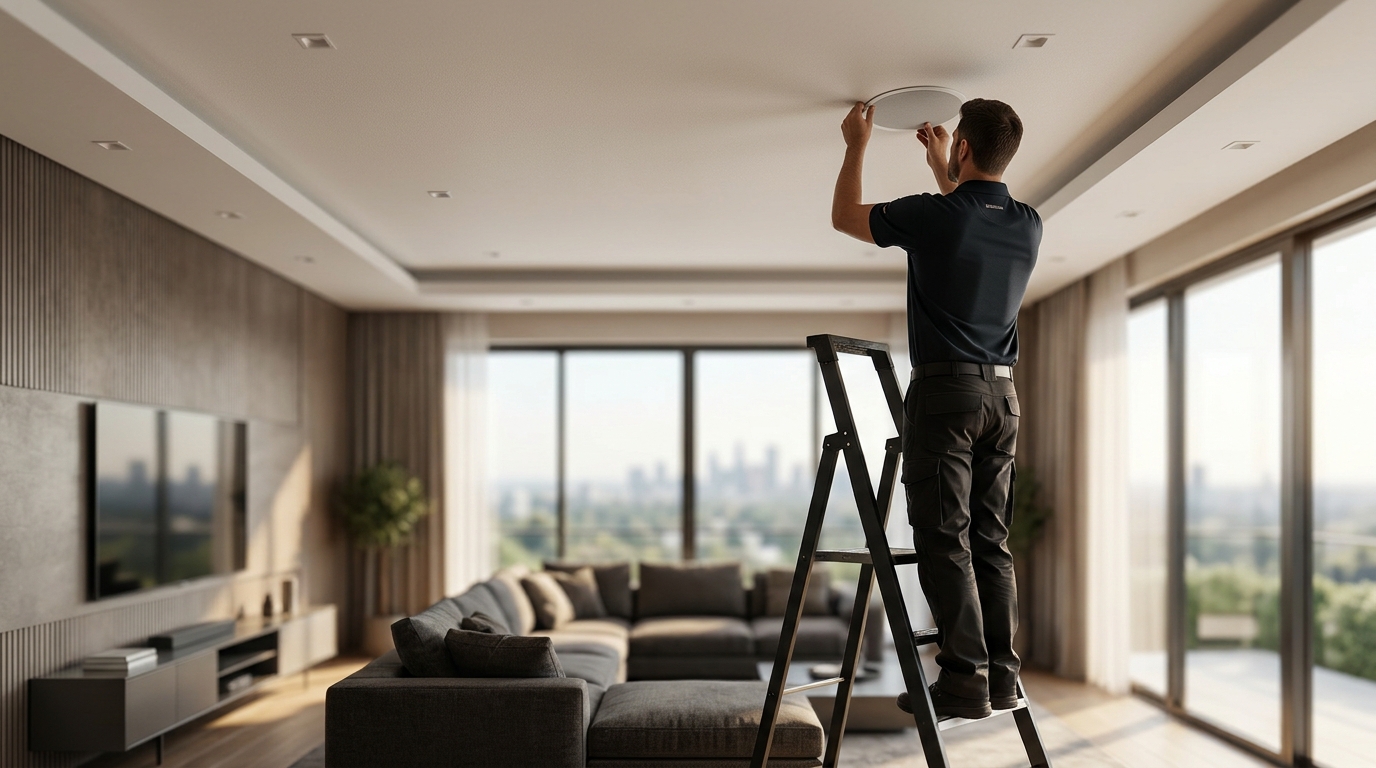
Installing in-ceiling speakers requires careful planning of room acoustics, wiring infrastructure, and amplifier capacity before any drywall is cut. JMG Audio Video Inc. advises homeowners to prioritize professional design to ensure seamless integration with existing smart home systems. This approach prevents common issues like sound leakage and poor coverage, resulting in a high-fidelity audio experience that enhances daily living in Northern New Jersey and New York City.
Understanding Acoustic Performance and Placement
In-ceiling speaker is a transducer designed to mount flush with the ceiling surface, providing omnidirectional sound distribution. Proper placement is critical because sound waves reflect off walls and floors, creating interference patterns that can muddy the audio. A professional installer measures the room dimensions to determine the optimal distance between speakers, typically aiming for a spacing that is 1.5 to 2 times the height of the ceiling. This ensures even coverage without creating dead zones or hot spots where the volume is too loud.
For example, in a living room with 10-foot ceilings, speakers should be spaced approximately 15 to 20 feet apart. This specific metric helps maintain a consistent sound field. If speakers are placed too close together, the sound becomes harsh and directional. If they are too far apart, you will notice distinct gaps in the audio coverage. Understanding these acoustic principles is the first step in a successful installation.
Wiring Infrastructure and Amplifier Capacity
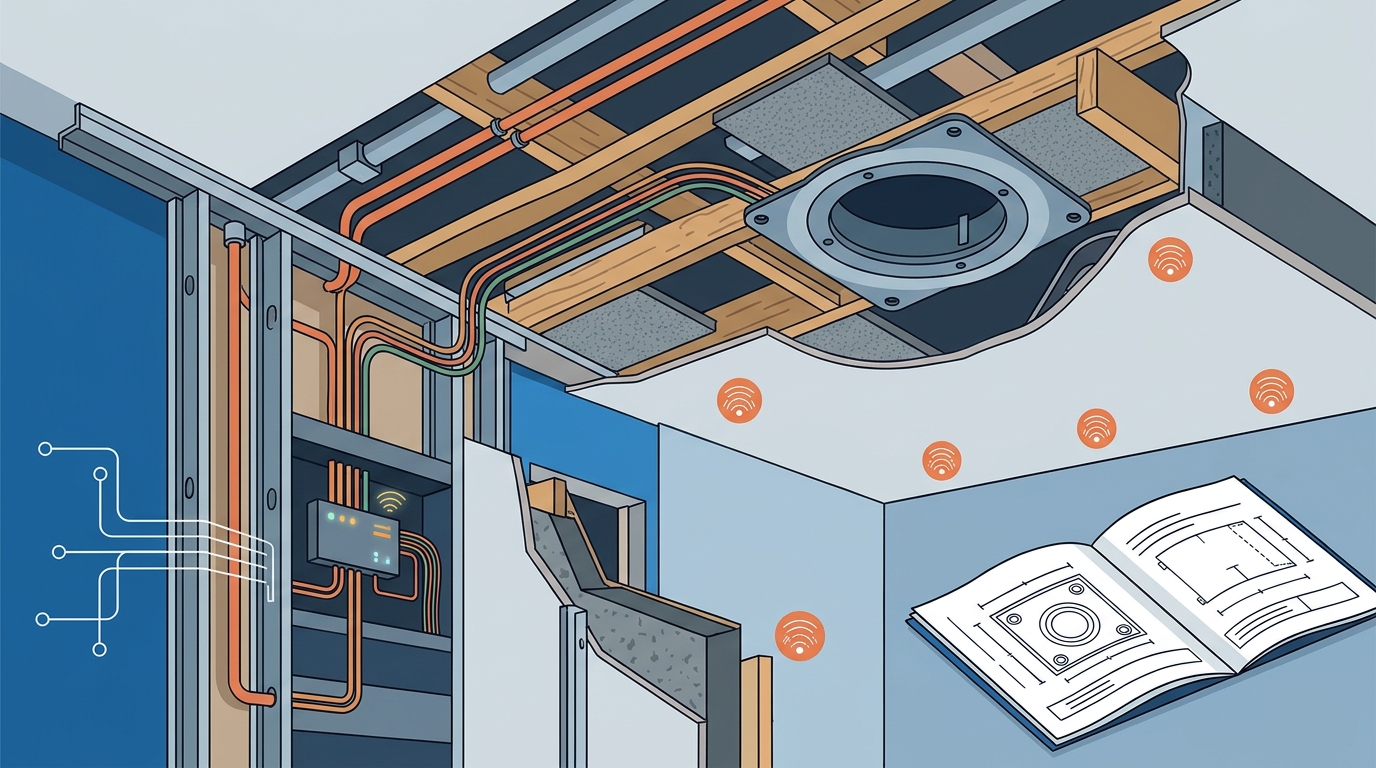
Whole-home audio system is a network of speakers, amplifiers, and control interfaces that must be designed as a cohesive unit. Before installation, you must assess the existing wiring in your home. Older homes may have outdated speaker wire that cannot handle the impedance load of modern high-efficiency speakers. An impedance mismatch can cause an amplifier to overheat or shut down, leading to system failure. JMG Audio Video Inc. often discovers during consultations that existing wiring is insufficient for a full whole-house audio setup, requiring new runs from the central equipment rack to each room.
Consider a home with eight rooms requiring audio. Each pair of speakers adds to the total impedance load on the amplifier. If you connect too many speakers to a single amplifier channel without proper impedance management, the system will not perform correctly. A professional design includes calculating the total load and selecting amplifiers with sufficient headroom. This ensures that every room can play at the desired volume without distortion or power loss.
Integration with Smart Home Automation
Smart home automation is the software and hardware ecosystem that allows users to control connected devices through a central interface. In-ceiling speakers are rarely used in isolation; they are typically part of a larger smart home system that includes lighting, climate control, and security. Integrating audio into this ecosystem requires compatible control protocols. For instance, a system using Crestron or Control4 platforms allows users to adjust volume and select sources from a touchscreen or smartphone. Without proper integration, you may end up with a fragmented experience where audio is controlled separately from the rest of the home.
Take a modern residence in Saddle River, NJ, where the homeowner wanted to control music in the kitchen, living room, and patio from a single tablet. The installer configured the in-ceiling speakers to work with the existing Control4 system. This allowed the user to create scenes, such as a morning routine that raises the shades and plays soft jazz in the kitchen. This level of integration is only possible when the audio system is designed alongside the automation platform from the start.
Choosing the Right Speaker Type for Your Space
Speaker sensitivity is a measure of how efficiently a speaker converts electrical power into sound pressure level, measured in decibels. Not all in-ceiling speakers are created equal. Some are designed for background music, while others are engineered for high-fidelity listening. For a home theater or a dedicated listening room, you need speakers with higher sensitivity and better dynamic range. For a kitchen or bathroom, a standard in-ceiling speaker may suffice. Choosing the wrong type can lead to disappointment, as a low-sensitivity speaker may struggle to fill a large open-concept space at low volumes.
For example, a large open-concept living area in Alpine, NJ, requires speakers with a sensitivity of at least 88 dB to fill the space effectively. A lower-sensitivity speaker would require excessive power to achieve the same volume, leading to distortion. By selecting the appropriate speaker type for each room, you ensure that the system performs as intended. This decision is a key part of the design process and should be made with the help of an experienced integrator.
Professional Installation and Long-Term Support
Professional installation is the process of mounting, wiring, and calibrating audio equipment by certified technicians. DIY installation of in-ceiling speakers is possible but often leads to suboptimal results. Professional installers have the tools and expertise to mount speakers securely, manage cable runs, and calibrate the system for optimal performance. They also provide long-term support, ensuring that the system continues to function correctly over time. JMG Audio Video Inc. offers comprehensive support for all installations, including troubleshooting and upgrades as technology evolves.
Consider a client in Franklin Lakes, NJ, who installed in-ceiling speakers themselves. After a few months, they noticed that the sound in the master bedroom was inconsistent. A professional inspection revealed that the speakers were not mounted at the correct angle, causing sound to reflect off the walls. The installer corrected the mounting and recalibrated the system, resolving the issue. This example highlights the value of professional expertise in achieving a high-quality audio experience.
Key Takeaways
- Proper speaker placement is critical for even sound coverage and should be based on room dimensions.
- Existing wiring must be assessed for impedance compatibility before installing new speakers.
- Integrating audio with smart home automation requires compatible control protocols and professional design.
- Speaker sensitivity determines how effectively a speaker can fill a space at low volumes.
- Professional installation ensures secure mounting, correct calibration, and long-term system reliability.
- Choosing the right speaker type for each room is essential for achieving the desired audio performance.
Frequently Asked Questions
How many in-ceiling speakers do I need per room?
The number of speakers required depends on the size of the room and the desired sound quality. For most living rooms, two speakers are sufficient. For larger spaces or rooms with high ceilings, four speakers may be needed to ensure even coverage. A professional installer can determine the optimal number based on the specific room dimensions and acoustic characteristics.
Can I install in-ceiling speakers in a bathroom?
Yes, but you must use speakers specifically designed for wet locations. Standard in-ceiling speakers are not rated for moisture and can be damaged by humidity. Wet-rated speakers are sealed to prevent water ingress and are suitable for bathrooms and outdoor patios. Ensure that the speakers you choose are IP-rated for the specific environment.
Do in-ceiling speakers work with existing home theater systems?
In-ceiling speakers can be integrated into a home theater system, but they are not a direct replacement for dedicated surround speakers. They can be used for front or center channels in some configurations, but dedicated speakers typically offer better performance for critical listening. A professional installer can help you determine the best configuration for your specific setup.
What is the difference between in-ceiling and in-wall speakers?
In-ceiling speakers mount flush with the ceiling, while in-wall speakers mount flush with a wall. In-ceiling speakers are generally easier to install and provide more even coverage in most rooms. In-wall speakers are useful in rooms where ceiling mounting is not possible or where a specific aesthetic is desired. Both types require professional installation to ensure proper mounting and wiring.
How much does it cost to install in-ceiling speakers throughout a home?
The cost varies widely based on the number of rooms, the type of speakers, and the complexity of the installation. A basic system with two speakers per room in a four-bedroom home may cost several thousand dollars. A high-end system with premium speakers and full smart home integration can cost significantly more. A professional consultation can provide a detailed quote based on your specific needs and budget.
Can I upgrade my in-ceiling speakers later?
Yes, in-ceiling speakers can be upgraded later, but it may require additional wiring work. If the existing wiring is compatible with the new speakers, the upgrade is straightforward. If new wiring is needed, the cost and complexity increase. Planning for future upgrades during the initial installation can save money and hassle down the line.
Conclusion
Installing in-ceiling speakers throughout your home is a significant investment that requires careful planning and professional execution. By understanding the acoustic, electrical, and integration requirements, you can ensure a high-quality audio experience that enhances your daily life. JMG Audio Video Inc. offers expert design and installation services for whole-home audio systems in Northern New Jersey and New York City. To discuss your project, contact our team for a personalized consultation. Learn more: Contact JMG Audio Video.