
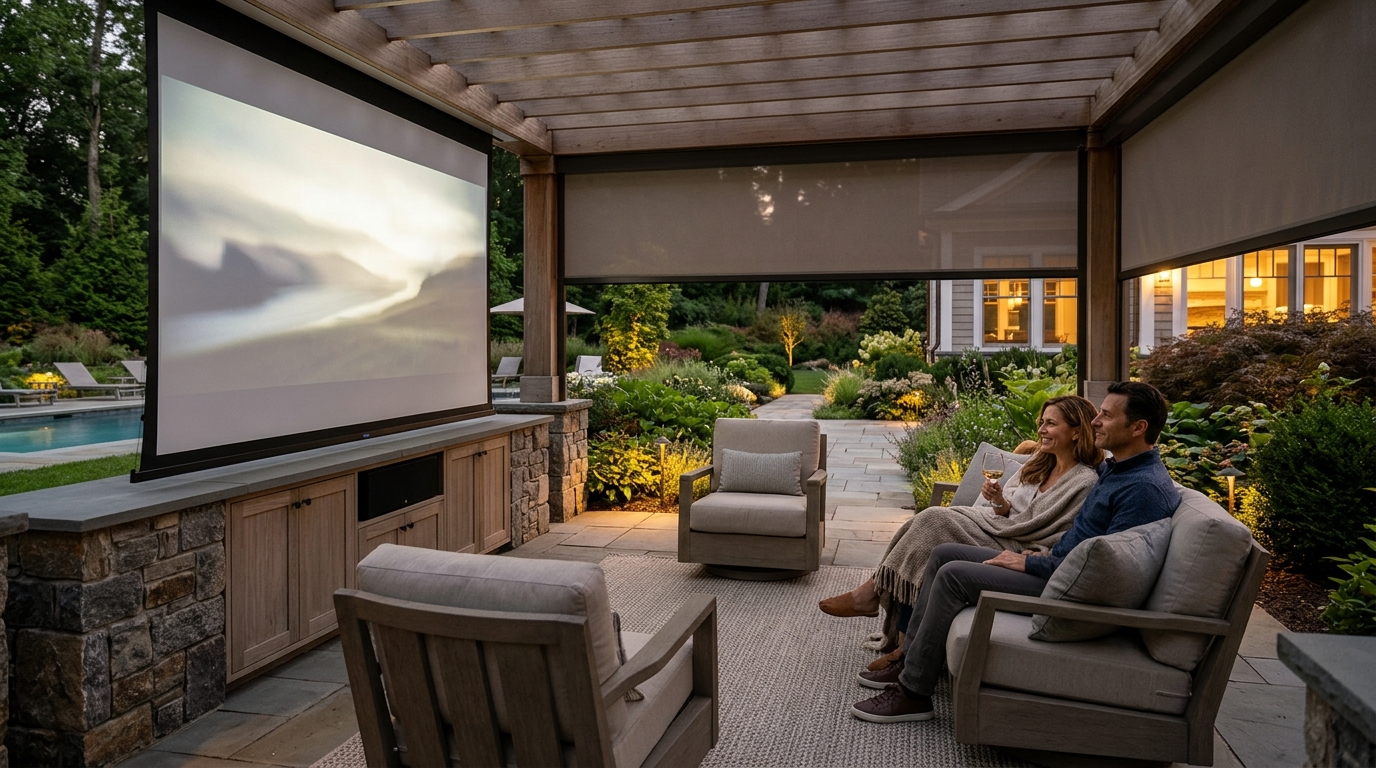
Customizing an outdoor home theater involves tailoring the audio, video, and lighting components to your specific landscape and viewing habits. Scaling the system requires balancing screen size with seating distance and ensuring weatherproof equipment can handle local climate conditions. JMG Audio Video Inc. helps homeowners in Northern and Upper-Central New Jersey and New York City design these spaces to maximize immersion while maintaining architectural integrity.
Defining the Viewing Zone and Screen Scale
The first step in customization is determining the physical footprint of your viewing area. A home theater is a dedicated space designed for cinematic viewing, and outdoors, this space is often defined by existing hardscaping or lawn boundaries. You must calculate the optimal screen size based on the distance between the screen and the primary seating row. For a standard 16:9 aspect ratio, the ideal viewing distance is typically 1.5 to 2.5 times the diagonal measurement of the screen.
If your backyard is narrow, a massive 150-inch screen may cause eye strain or require seating that is too close to the projection source. Conversely, a large, open lawn allows for a more expansive setup. JMG Audio Video Inc. evaluates these dimensions during the initial consultation to ensure the scale of the display matches the geometry of the property. This prevents the common mistake of installing a screen that overwhelms the space or one that feels too small for the available area.
Weatherproofing and Environmental Durability
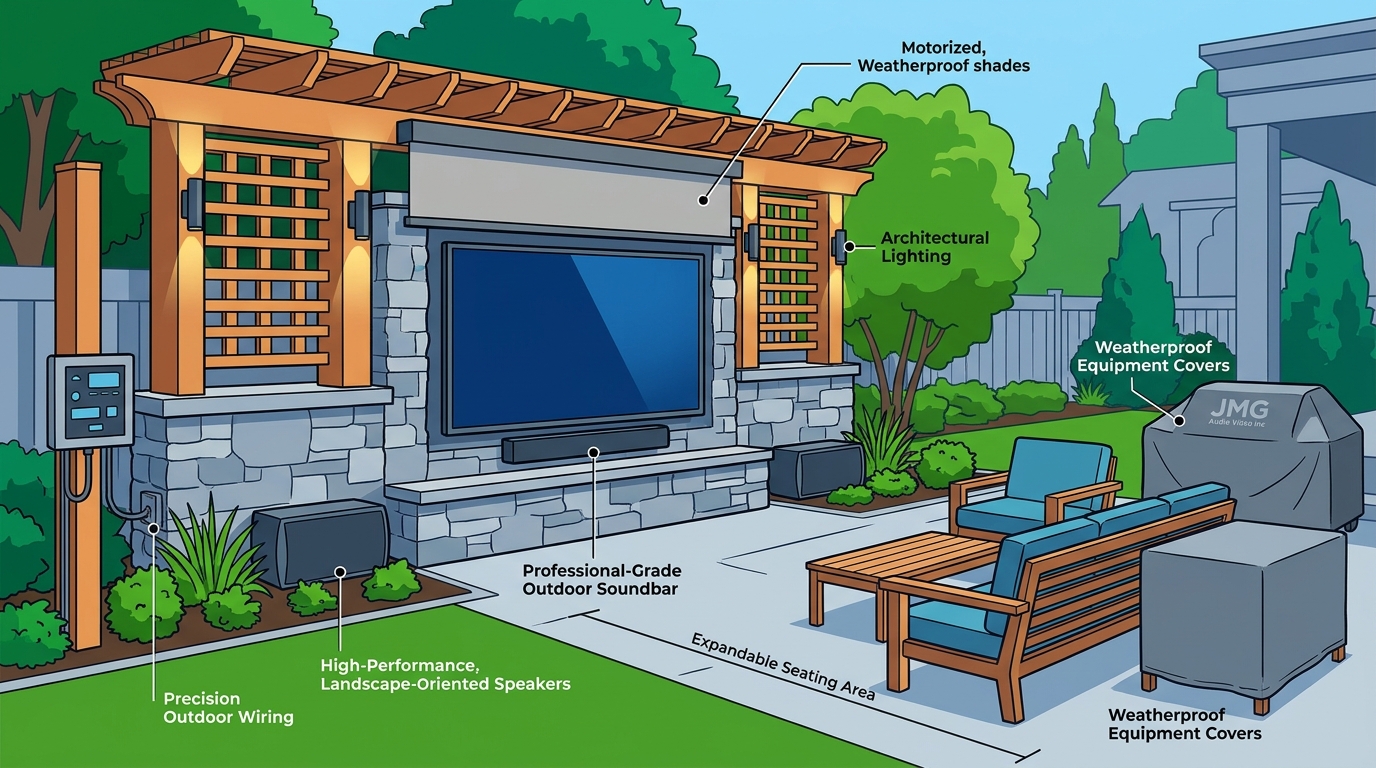
Outdoor equipment is distinct from indoor gear because it must withstand fluctuating temperatures, humidity, and precipitation. A weatherproof speaker is a device engineered with sealed enclosures and corrosion-resistant materials to function reliably in outdoor environments. In regions like Alpine and Franklin Lakes, NJ, systems must handle both summer heat and winter cold. Standard indoor speakers will fail quickly when exposed to moisture, leading to distorted sound or complete failure.
Scaling your system for durability means selecting components that are rated for outdoor use. This includes marine-grade speakers and projection screens designed for high brightness to combat ambient light. JMG Audio Video Inc. integrates these robust components into a cohesive system, ensuring that the audio remains clear and the picture remains vibrant regardless of the weather. Proper housing and cable management are also critical to protect the investment from physical damage and environmental wear.
Audio Placement and Acoustic Control
Sound behaves differently in an open outdoor space than in a closed room. An outdoor audio system is a network of speakers designed to project sound to a specific zone while minimizing spill into neighboring properties. In a backyard setting, you must consider the direction of the wind and the reflective surfaces of nearby fences or walls. Poor placement can result in sound that is too loud for neighbors or too quiet for the viewers.
To customize the audio experience, you can use directional speakers that focus sound on the seating area. This allows you to scale the volume without creating a nuisance for the community. JMG Audio Video Inc. uses professional tuning to ensure the sound is well-contained. This approach is particularly important in dense suburban areas where privacy and neighbor relations are a priority. The goal is to create an immersive bubble of sound that feels large and cinematic but remains respectful of the surrounding environment.
Lighting Integration and Ambiance
Lighting is a crucial element of customization that sets the mood for an outdoor theater. Architectural lighting is the use of artificial light to enhance the visual appeal of a structure or landscape. In an outdoor theater, you need a balance between functional safety lighting and atmospheric mood lighting. Pathway lights ensure safe movement around the seating area, while accent lights can highlight landscaping features or the screen itself.
Scaling your lighting design involves integrating smart controls that allow you to adjust brightness and color temperature. For example, you might want warm, low-level lighting during a movie to reduce eye strain, but brighter, cooler lighting for social gatherings. JMG Audio Video Inc. designs these lighting scenes to work in tandem with the audio and video systems. This creates a seamless transition from a casual backyard hangout to a full cinematic experience with the press of a single button.
Control Systems and User Experience
The final layer of customization is the interface through which you control the system. A smart home control system is a centralized platform that allows users to manage multiple devices from a single interface. For an outdoor theater, this might include a wall-mounted touchscreen, a mobile app, or voice commands. The system should be able to power on the projector, lower the screen, dim the lights, and start the audio system in a single sequence.
Scaling the control system means ensuring it is robust enough to handle the complexity of the installation. JMG Audio Video Inc. works with top-tier brands to provide reliable, user-friendly interfaces. This ensures that even non-technical family members can operate the system with ease. The goal is to make the technology invisible, allowing you to focus on the entertainment rather than the mechanics of the setup.
Key Takeaways
- Screen size must be scaled to match the viewing distance to prevent eye strain and ensure optimal immersion.
- Weatherproof components are essential for durability in outdoor environments, particularly in variable climates.
- Directional audio placement helps contain sound to the viewing zone, respecting neighbors and privacy.
- Integrated lighting design enhances ambiance and provides functional safety for outdoor spaces.
- Centralized control systems simplify the operation of complex audio, video, and lighting setups.
- Professional installation ensures that all components work together seamlessly for a cohesive experience.
Frequently Asked Questions
What is the ideal screen size for a backyard theater?
The ideal screen size depends on the distance from the screen to the seating. A general rule is that the viewing distance should be 1.5 to 2.5 times the diagonal of the screen. For a 100-inch screen, this means seating should be between 12 and 20 feet away.
How do I prevent sound from disturbing my neighbors?
Use directional speakers that focus sound on the seating area. Professional tuning can also help shape the sound field to minimize spill. JMG Audio Video Inc. can design a system that balances immersion with neighborly consideration.
Can I use indoor speakers for an outdoor theater?
No, indoor speakers are not designed to withstand moisture and temperature fluctuations. You must use weatherproof or marine-grade speakers that are sealed and corrosion-resistant to ensure longevity and reliable performance.
What type of screen is best for outdoor use?
High-brightness projection screens or large outdoor-rated LED displays are best. These screens are designed to be visible in ambient light conditions and are often weather-resistant. The choice depends on your budget and the level of immersion you desire.
How do I control an outdoor theater system?
You can use a centralized smart home control system, such as a touchscreen, mobile app, or voice commands. This allows you to manage all components, including audio, video, and lighting, from a single interface for a seamless experience.
Start Your Outdoor Theater Design
Transforming your backyard into a cinematic destination requires careful planning and professional execution. JMG Audio Video Inc. provides the expertise to customize and scale your outdoor home theater to fit your unique space and lifestyle. to schedule a consultation and begin designing your perfect outdoor entertainment space.