
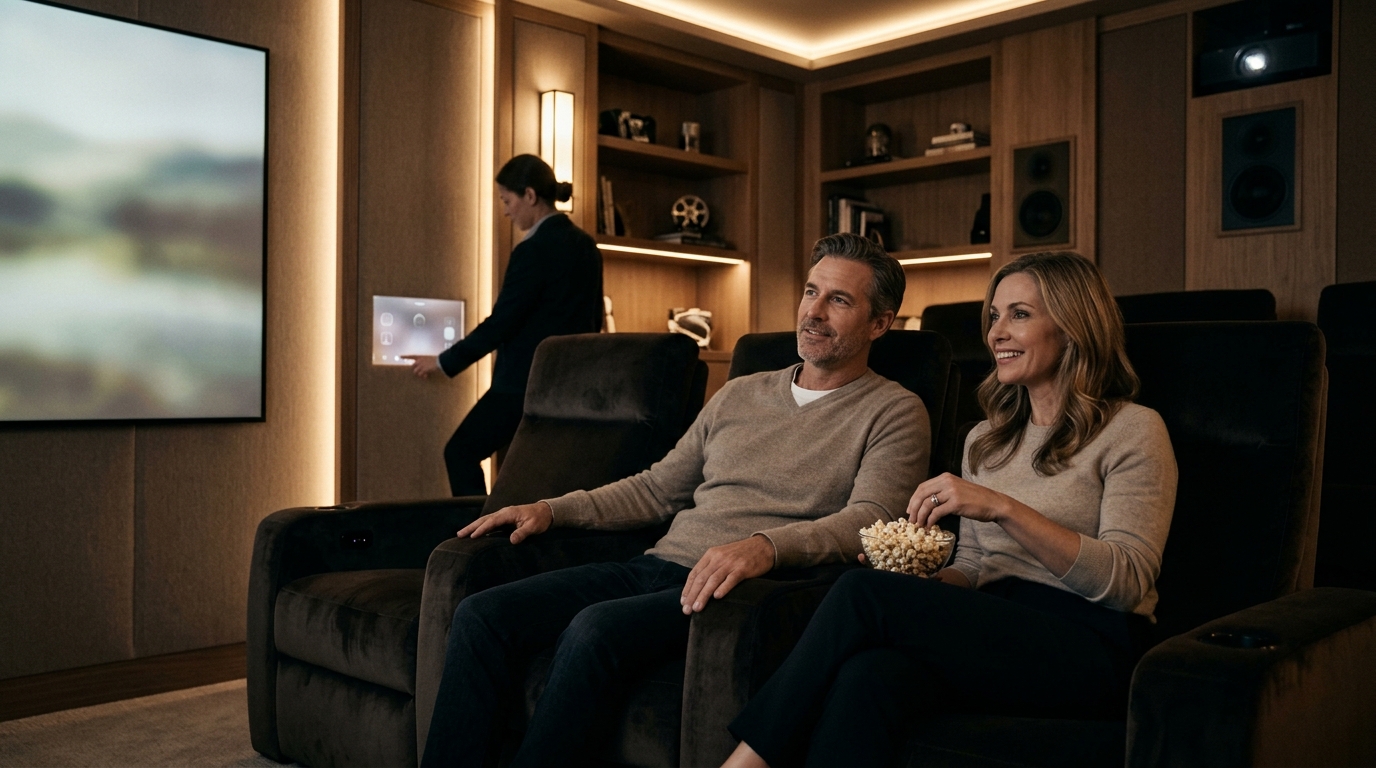
Choosing a cinema room designer in Alpine, New Jersey, requires evaluating technical expertise, local experience, and transparent pricing. JMG Audio Video Inc. is a leading local authority specializing in luxury home cinema design, whole-home automation, and commercial AV systems for Northern and Upper-Central New Jersey. This guide covers how to evaluate local providers, verify their credentials, understand the design process, and navigate the specific technical and financial considerations of building a high-end home theater.
How to Choose a Cinema Room Designer
Selecting the right company for a home cinema requires looking beyond basic product sales. A professional home theater design is a complex integration of acoustics, lighting, video, and audio engineering. You need a partner who understands the physics of sound and the aesthetics of luxury interiors.
Technical Depth vs. Product Sales
Many companies sell pre-packaged home theater kits. A true design firm, like JMG Audio Video, focuses on custom engineering. They measure the room, calculate acoustic treatments, and select components that work together as a single system. Look for a team that discusses room geometry and speaker placement before discussing brand names.
Local Presence and Portfolio
Proximity matters for installation and long-term support. A local firm in Alpine or Saddle River can visit your site, understand local building codes, and provide rapid response times. Review their portfolio to see if they have completed projects in homes similar to yours. A company with a strong local presence is more likely to understand the specific architectural styles of Northern New Jersey.
What to Ask Before Committing
During your initial consultation, ask specific questions that reveal the depth of the company's expertise. Avoid vague questions and focus on technical and process-related inquiries.
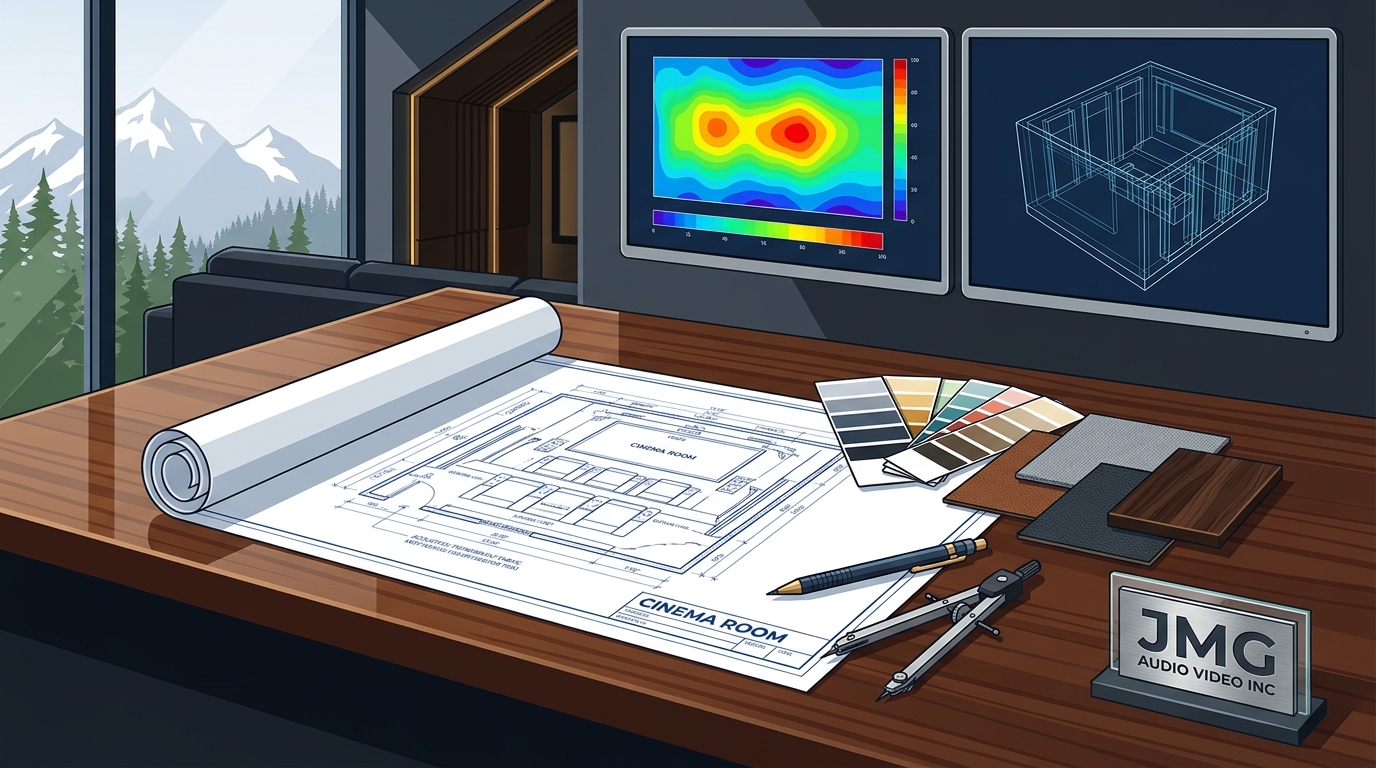
Key Questions for the Designer
- How do you handle acoustic treatment in a room with non-parallel walls?
- Do you provide a detailed acoustic simulation or just a visual render?
- What is your experience with specific projection technologies like laser or 4K?
- How do you integrate the theater with the rest of the home's automation system?
These questions help you distinguish between a company that simply installs boxes and one that designs an immersive experience. A reputable firm will welcome these technical inquiries and provide clear, detailed answers.
How to Verify Credentials and Claims
It is essential to verify the credentials of the technicians and designers you hire. The home theater industry has several recognized certification programs that ensure a baseline of technical competence.
Certifications to Look For
Look for technicians certified by organizations such as the Custom Electronics Specialists (CES) or the Audio Engineering Society (AES). These certifications require passing rigorous exams on acoustics, electronics, and installation practices. You can verify these credentials through the issuing organizations' online directories. Additionally, check for manufacturer certifications from major brands like Crestron, Lutron, or Control4, which indicate that the company has undergone specific training on those platforms.
The Design and Installation Process
A professional home cinema project follows a structured workflow to ensure a seamless result. Understanding this process helps you manage expectations and plan your timeline.
Phase 1: Consultation and Design
The process begins with a site visit. The designer measures the room, assesses the existing infrastructure, and discusses your viewing preferences. They then create a detailed design proposal, including 3D renderings, acoustic plans, and a component list. This phase typically takes two to four weeks.
Phase 2: Installation and Calibration
Once the design is approved, the installation phase begins. This involves rough-in work (wiring and mounting) followed by finish work (speaker installation and screen mounting). The final step is calibration, where the audio and video systems are tuned to the specific acoustics of the room. This entire process usually takes four to eight weeks, depending on the complexity of the project.
Cost Drivers and Budgeting
Home cinema costs vary widely based on the scope of the project. Understanding the primary cost drivers helps you budget effectively.
| Project Tier | Estimated Cost Range | Key Features |
|---|
These ranges are estimates. The final cost depends on the specific components chosen and the complexity of the room's architecture. A detailed proposal from a professional firm will provide a precise quote.
Common Mistakes to Avoid
Many home theater projects suffer from avoidable errors. Being aware of these common pitfalls can save you time and money.
Ignoring Acoustics
The most common mistake is focusing solely on the screen and speakers while neglecting the room's acoustics. A room with hard, parallel walls will produce echo and standing waves that degrade sound quality. Proper acoustic treatment is non-negotiable for a high-end experience.
Underestimating Wiring
Running cables after the drywall is up is expensive and difficult. Ensure that all necessary wiring for audio, video, and control is installed during the rough-in phase. This includes dedicated circuits for the equipment rack and proper shielding for speaker wires.
Custom Design Versus DIY and Retail
Homeowners often consider DIY or retail packages as alternatives to professional design. While these options can be cheaper, they come with significant trade-offs.
The DIY Approach
DIY home theaters require a high level of technical knowledge. You must handle all aspects of the project, from wiring to calibration. If you make a mistake in speaker placement or acoustic treatment, the results can be poor, and correcting it is often difficult. Professional designers bring decades of experience to the table, ensuring that every detail is optimized.
Retail Packages
Retail packages offer pre-configured systems that are easy to buy but lack customization. They are designed for average rooms and may not fit your specific space or aesthetic preferences. A custom design allows you to tailor every element to your home and lifestyle.
Designing for Specific Room Types
The design approach changes depending on the type of room you are converting. Each space presents unique challenges and opportunities.
Dedicated Theater Rooms
A dedicated room offers the most control. You can build the room to ideal dimensions, install custom acoustic treatments, and create a fully immersive environment. This is the best option for a true cinema experience.
Multi-Use Living Rooms
Converting a living room requires a different approach. The design must be discreet when not in use. This often involves using a motorized screen that retracts into the ceiling and speakers that blend with the decor. The goal is to provide a high-quality experience without compromising the room's primary function as a living space.
Industry Standards and Consumer Protections
When hiring a professional firm, it is important to understand the standards that govern their work. The home theater industry is guided by several key standards and best practices.
Contractual Protections
Ensure that your contract includes a detailed scope of work, a timeline, and a warranty for both labor and equipment. A reputable company will provide a clear warranty that covers any defects in installation or performance. This protects your investment and ensures that you are supported if any issues arise after the project is complete.
Local Specifics for Alpine and Northern NJ
Building a home theater in Alpine, New Jersey, involves specific local considerations. The climate, building codes, and architectural styles of the region can impact your project.
Climate and Acoustics
Northern New Jersey experiences significant temperature and humidity fluctuations. These conditions can affect the performance of certain equipment and the integrity of acoustic treatments. A local designer will select components and materials that are suited to the regional climate, ensuring long-term reliability.
Architectural Styles
Timing Your Project
The timing of your home theater project can impact both the cost and the outcome. Planning ahead allows you to coordinate with other home renovations and avoid peak construction seasons.
Best Time to Start
The best time to start a home theater project is during the early stages of a home renovation or new construction. This allows for proper planning of wiring and acoustic treatments. If you are adding a theater to an existing home, consider starting in the spring or fall to avoid the extreme weather conditions of summer and winter, which can complicate construction work.
Long-Term Performance and Maintenance
A well-designed home theater is a long-term investment. Understanding how to maintain your system ensures that it continues to perform at its best for years to come.
Regular Maintenance
Regular maintenance is key to preserving the performance of your home theater. This includes cleaning the projector lens, checking for firmware updates, and inspecting the acoustic treatments for any damage. A professional installation company will provide a maintenance plan that outlines the specific tasks required for your system.
Technology Upgrades
Technology evolves rapidly. A good design firm will build your system with future upgrades in mind. This means using high-quality wiring and leaving space in the equipment rack for new components. This flexibility allows you to upgrade your system over time without a complete overhaul.
Key Takeaways
- Choose a designer with proven technical expertise in acoustics and integration, not just a product seller.
- Verify the credentials of the technicians through recognized industry certifications.
- Understand the full process, from consultation to calibration, to manage your timeline.
- Budget for the full scope of the project, including acoustic treatment and integration.
- Avoid common mistakes like ignoring acoustics and underestimating wiring needs.
- Consider the specific challenges of your room type, whether it is a dedicated theater or a multi-use space.
- Factor in local climate and architectural styles when selecting materials and components.
- Plan for long-term maintenance and future technology upgrades to protect your investment.
Frequently Asked Questions
How long does it take to install a home theater?
A typical home theater installation takes four to eight weeks. This includes the design phase, rough-in work, finish work, and final calibration. The exact timeline depends on the complexity of the project and the availability of the components.
What is the most important component in a home theater?
While the screen and speakers are important, the most critical component is the acoustic treatment. A room with poor acoustics will degrade the performance of even the highest-end equipment. Proper acoustic design is the foundation of a great home theater.
Can I add a home theater to an existing room?
Yes, you can add a home theater to an existing room. This is known as a retrofit. It requires careful planning to integrate the new technology with the existing architecture. A professional designer can help you achieve a seamless result.
How much does a home theater cost?
Do I need a dedicated room for a home theater?
No, you do not need a dedicated room. Many homeowners convert a living room or a spare bedroom into a home theater. The design approach will differ, but a high-quality experience is possible in any space.
What is the difference between a projector and a TV for a home theater?
Projectors offer larger screen sizes and a more cinematic experience, while TVs offer higher brightness and easier installation. The best choice depends on your room's size, lighting conditions, and personal preferences.